
THE SONGS AND MEMORIES OF MY HIGH SCHOOL YEARS UPDATE AT THE UNIVERSITY OF THE PHILIPPINES
This is my High School group pictures: Founding of our beloved University of the Philippines IN 1908
The University of the Philippines was established in 1908 as the American University of the Philippines by an act of the First Philippine Legislature Act No. 1870, otherwise known as the University Charter, specified the function of the University, which is to provide advanced instruction in literature, philosophy, the sciences, and arts, and to give professional and technical training.UP Prep was a unique high school created in 1954, when the UP Board of Regents authorized then UP President Vidal Tan to open a first class high school in Manila. The school’s high standard curriculum was designed for secondary school graduates with the aptitudes and intellectual talents for university level education. The faculty was carefully selected for these advanced subjects. Only by passing a battery of rigorous examinations could a student get in, and once accepted, he or she had to hurdle to pass each of the four tough years of the highest standard of education ever given to high school students in the Philippines before one could graduate. In 1973, after graduating 20 classes — comprised altogether of 1500 graduates — UP Prep was merged with UP High School to later become what is now known as UP Integrated High School.

For me, U.P. Prep High, was another passage to adulthood. I was exposed early to student politics and activism, when a strike by college seniors closed classes in 1957 and sent us home for a week during my yearling year. I was puzzled why the strike, but it was a transition of presidency of the University, and there was no sitting president.
Later, I learned more about classmates from the best among the best, chosen from different walks of life. You apply yourself to a diverse bunch of kids, invariably they were not from the same parish, like back in the elementary. My little world expanded by the distant location (two jeepney rides) to Padre Faura. Fascination in the field of Sciences and Mathematics from Liberal mentors instead of Religion gave me a glimpse of my future career. Disallowed text by the catholic church, accessed freely in High School, and devoured voraciously, led to the knowledge of my heritage, and our true history. My sensibility changed and it became more acute in the unequal treatment of less influential classmates by superiors.

RIZAL HALL: My High School: UP Prep was a unique high school created in 1954, when the UP Board of Regents authorized then UP President Vidal Tan to open a first class high school in Manila. The school’s high standard curriculum was designed for secondary school graduates with the aptitudes and intellectual talents for university level education. The faculty was carefully selected for these advanced subjects. Only by passing a battery of rigorous examinations could a student get in, and once accepted, he or she had to hurdle to pass each of the four tough years of the highest standard of education ever given to high school students in the Philippines before one could graduate. In 1973, after graduating 20 classes — comprised altogether of 1500 graduates — UP Prep was merged with UP High School to later become what is now known as UP Integrated High School.

Our UP Diliman Campus early 1960
In 1939, the Board of Regents acquired a 493-hectare land in the Diliman District of the newly established Quezon City. Construction began on the area on the same year. The development of the area was then stalled by World War II, with invading Japanese troops occupying some of the buildings built. By 1942, the university was forced to close down some of its colleges, with only the Colleges of Medicine, Engineering, and Pharmacy maintaining their operations.
When the war ended in 1945, the buildings intended to be the homes of the College of Law and the College of Liberal Arts were left with extensive damages. The university administration led by UP President Bienvenido Gonzales sought a grant worth P13 million from the US-Philippines War Damage Commission to restore the damaged facilities and to construct new ones so that the transfer of the university from Manila to Diliman could be pushed through. Through a symbolic ceremony of transferring the Oblation from Manila to Diliman, the whole university's administration was relocated to the new campus. New buildings were constructed in response to the creation of more academic degrees.
Organization of the newly established institutes and the reformulation of programs followed with the establishment of programs such as the General Education Program, a delegated roster of core courses required to be taken by all students at the undergraduate level. Under the presidency of UP President Vicente Sinco, a University College was made to address the need of a much-organized college structure. The College of Arts and Sciences was created to offer major subjects in the natural sciences, social sciences and humanities.
Thank you Cap and Helen for hosting our little mini once again. Thank you for the sumptuous meal, the take home goodies and excellent company. Thank you Alex and Marissa for the wonderful gifts, excellent company and the delightful music. Marissa, our twins were especially enamoured with your piano renditions. We missed you Augie and Violet. Hope nothing serious caused you not to show up. We really had a most enjoyable evening. Salamat RC & Dudi

A poignant oblation photo. My interpretation of my last look and parting with "UPPHS". "Paalam" Prep High.
My political ideology agrees with the student activism during the Marcos administration. This is one reason why I left the Philippines, long before Martial Law. UP Diliman became the bastion of activism in the 1960s and 1970s, with various tumultuous events eventually contributing to the declaration of Martial Law in 1972. In this period, UP Diliman became a center of dissent towards the Marcos' administration. The year 1971 marked an important event in the Philippine history when the entire Diliman campus was declared the Diliman Commune, and became free from government control. Students and faculty members took over the campus in response to increasing military presence and the increase of oil prices. The students established full control of the campus for a month, barricading the streets with chairs and tables.
A Country, A Race, A Nation
Hosts to heroes long since departed,
Mark the revolutions.
The governments, who left dry tokens
Of their sojourn here
On the pearl of the Orient Seas,
Any broad alarm of the hastening doom
Is lost in the gloom of crimes against its people.
But today, the Country cries out to us, clearly, forcefully,
Come, you may stand upon my
Back and face your distant destiny,
But seek no haven in my shadow.
I will give you no retiring place up here.
You, created only a little lower than
The guardians, have crouched too long in
The bruising darkness,
Have lain too long, Face down in feudal ignorance.
Your minds spelling rancor
Armed for slaughter.
The country cries out today, you may stand by me,
But don't hide behind false constitution.
Across the hall of nations,
A poor people cries for justice,
Come rest here by my side.................ASC
Marissa playing America the Beautiful, The Theme from the American Civil War, O'Sheanandoah, Ang Bayan Ko
As she plays these melodic patriotic songs, I begin to reminisce, my stay at Rizal Hall. I have passed over 70 years of my life, but I still have vivid memories of the halls, and classrooms at the University of the Philippines in Manila. I can not deny my deep feeling of warmth to this great school. Among the colleges that I have attended in the Philippines and in the USA during my academic life, my particular fondness is always with the University of the Philippines. I and like every alumni of the U. P. Preparatory High School should be so proud of this University and the rich traditions that it represents…ASC
| Reaching my destination in San Francisco, my dreams of more liberation of my ideology and thoughts were fulfilled. But we wanted more, to see life without violence, unlike the country I left. We wanted media that contained truth. Some of us risked our lives to find out what the government was doing and let the underground press know. We wanted to talk about things in print that we were not allowed to discuss in our culture of origin. We wanted to live without stupid, arbitrary rules, either for ourselves or for our children. Some of our children, as adults today, say they wish we had been more protective of them, or offered more structure.It was a moment in history when a mushroom explosion of consciousness began altering the life force. Through that explosion, we broke down the prison walls of "intellect as the ultimate". We focused on the heart, and by doing so, reopened our cookie jar of possibilities·politically, socially, sexually and spiritually. The effects of that explosion have permeated our culture. We, as a generation, have a responsibility to see that the 60's are remembered in the context in which they unfolded." |
 Looking up Powell St. from Market St. The canteen at Woolworth on your right, served me well at lunch. During my job search, the hills of San Francisco was a hindrance. I think my overdeveloped legs were the outcome of the constant walking in SF. The Filipino community has grown remarkably since World War II and has spread to all areas of the city, especially the South of Market area. The affluent Castro district (technically Eureka Valley near Twin Peaks) has attracted gays and lesbians from throughout the country, becoming perhaps the most famous gay neighbourhood in the world. Its streets are adorned with elegantly restored Victorian homes and landmarks highlighting significant dates in the struggle for gay rights. It is said that no local politician can win an election without the gay community's vote. Dropping down California St. Fabled hills, were the scourge of the handicap, nowhere in any city but San Francisco, where wheel chairs are absent...my own observation. I remember there were so many people coming in for the Peace March, we wondered around listening to the sounds of the bands warming up at the Union Square. The guitars faded in and out like the morning fog that drifted in and out on the breeze off the bay. Again, there was the thick smell of incense and marijuana, but there was something else in the atmosphere as well: the air was glowing electric with excitement and anticipation. Everyone felt that we were about to be part of something really big.  |

The girls of St. Theresa, the innocence of the young ladies above, untouched by the sixties youth revolution remained in my mind. Why someday, one of them will be my partner in life.

So much legend has been woven around the Sixties that it is very hard to see them for what they were, especially the ideas that sparked the Youth Revolution. It was a time when it was really something to be young.' I should mention that many of us whose youth had been pinched by post-war austerity did our best to have another one by joining the party.Sex, drugs and rock & roll are the staple ingredients of the legendary Permissive Society "That sense of freedom had a place and I don't think you can blame the Sixties for what we are like nowadays. "I think that is an excuse for the way things are now and you can't make excuses."Some things may have got out of hand, but it was a time when people became more liberated."It is not true to say it was a time of hedonism. It is excessive to say that."We were obvioulsy involved in photography and we had some innovative people working for us and we had ideas. The Sixties had a lot to offer."
|


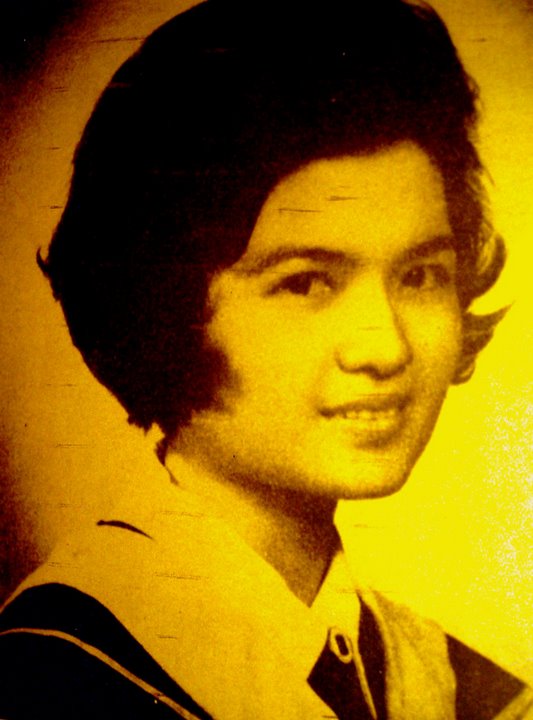

RIP NICK PELAEZ MY DEAR FRIEND
Nick can be persistent in his quest for a girlfriend. We once followed a certain sophomore named Kathleen.... . all the way home thru busses and jeepneys with her, and managed to egged a smile; all the while serenading her the Irish ditty Kathleen in front of passengers.

University of the Philippines Prep Class'61....sitting from left Doddie, M.D.,PhD, Nilda, Assoc.Principal Scientist
standing...Babes, Paul,ret.

Don't know if you remember me. Nilda Fulgencio. I enjoy reading your e-mails and I couldn't help but feel the longing you feel for our country while singning the song. You see I have not gone home since 1972. Anyway, I have suddenly been reading more about you
from the MIT CHECHEM website and this. Keep communicating and regards to you and the family
Nilds.

RENE HERBOSA
Trivia: The places to go to for lunch were:
1. Cherry Pink on Taft Ave.Patronized mainly by girls. Sosyal.
2. Green Valley, adjacent to Rizal Hall. Only Prep boys go there...to eat and smoke. For P.40, you get rice, beef steak. For p .10 more, you get Coke.
3. Rizal Hall canteen. Pag-aari nina Auring, George, and siblings. Helper,s name: Agustin. Nakaaway yata ni RC. Here you have choices of rice meals, palabok, sandwiches.
4. Justice Canteen. Behind the Dept. of Foreign Affairs. This is the place where you want to be seen dining. Minimum cost of lunch is P.60. The place is really for DOJ officials and justices; patrons smoke blue seal Chesterfields or Salems. It's best to be there on a Monday, when your allowance for the week is still intact.
After lunch, you can buy santol or hilaw na mangga con bagoong at the driveway entrance to Rizal Hall. That's where I first saw Nora Borja, then third year, and crush ng bayan. The late Eulogio Tablante, Babe Acevedo's brother in law( elder brother ni Eva) was the James Dean of UP Prep. The Fourth year gangs were Cronvar and Dixie; Noel Alejo, Oyen Alejo, Rudy Gumba, Jun Gregorio, Rene Santiago+, Nides Belgado, Cesar Ledda, Taddy Palma, Silvino Guzman, and Ed Coronel were Cronvar. Jojo Binay, Angel Reano, Vic Guiang, Rey Aguilar, and others whose names I can't recall at the moment were Dixie.

RIP NESTOR RIVADELO


CARMELO MADRID
Carmelo is not a relative, not even a distant one, although he shares my Madrid relatives' wry sense of humor. To wit: While walking down Escolta Carmelo blurted that the man we just passed by was a hypocrite. When I asked how he knew. He said the man snarled when he tried to "hipo" his car! Also, he figured the man walking ahead of us at Padre Faura was
good at short hand. Kasi daw maigsi yong kanang kamay!I am sure the Korean Airline crew he fies with are getting a dose of the Madrid humor!
Summer is a slow period for getting piano gigs, like once a month instead of the every other weekend during the fall and winter. My latest was at a cocktail hosted by the president of a local bank at his Chapaqua mansion, two blocks away from the Clintons. My eyes bulged when they showed me the piano - it was an 1890 Bosendorfer! Maski Chopstick maganda ang tunog sa Bosendorfer.
Am sure you are enjoying retirement, like most of our batchmates who opted for the same thing!
Doddie

Basta salamat sa mga San Pedro, kasama na si Honorio at Edgar. Saw Q's email sa UP APO loop namin... bilin sa aming kabatch Cesar "Karias" Frias (also here in Ontario), alagaan daw ako dahil 5 na ang SLN sa aming batch. Namely: (1) Jay Pecache (2) Jose Sason (3) Dr. Joel Ganaban (4) Rellie Cifra (5) Boni Tamayo.
Ooops!... ayoko pang maging # 6. Ok lang ang #17 dahil 17 kami sa batch namin, hehehe Alam mo bang kabatch ko sina Pong Villareal, Q Pastrana, Deo Reyes, Honorio San Pedro, Cesar Pascual, Boy TanGatue, Joe Espiritu; Angie Tonson, Cesar Frias, Vivo Vidal, Emac Macapagal.
Our Frat had a Memorial Day for our departed brods last August 9, 2008, Sat, UP Chapel, 10am. In-charge sina Jojo Binay at Tom Banguis.
81 na pala ang nauna since 1951, kasama ang ating Prep teacher na si Guillermo Lazaro (founding member). Marami sa mga nauna na ay kilala mo, Pol.
Doddie Bautista
Gerry Bautista
Manny Bustamante
Vic Calulut
Nanding Casanova
Rellie Cifra
Manny (Duck) Clamor
Boy Dalao
Walter del Rosario - Prepian
Bobby Galias - our GC when I joined APO
Dr. Joel Ganaban
Elpi Pada
Ed Pastoral
Florendo Rabago - UP Faculty
Guillermo Lazaro - UP Faculty
Ben Roa - Prepian (elder brother ni Boots ) (husband ni Nora Borja - Prepian)
Jose Sason - Prepian
Jay Pecache - Prepian
Omar Sayoc
Dr. Art Taca
Boni Tamayo
Tristan Villareal - husband of Marlene Clemente ( Marlene, also a Prepian, sister of our Prep teacher Ms. Clemente)
Ernie Vizconde - youngerbrother ni Its
16 sa listahan mo ang kakilala ko. I didn't realize na si Relly ""Ciper" Cifra at si Walter del Rosario ay sumakabilang buhay na. I used to play chess with Relly sa Vinzons...lagi siyang panalo. Art Taca was easygoing, anak ng Director ng Manila Zoo. Dodie was black belter sa Judo; worked at United Labs. That's how we met again after college. I was with Richardson-Merrell. Di ba sina Yani at Jun Veron Cruz and kabatch mo sana...pero nagpa-defer ka dahil inatake ka ng asthma during a session?
Alam mo, nasaang landas kaya ang Pilipinas ngayon kung sina Jesus Lava ay nabigyan ng pagkakataong mamuno? Nasilip mo ba kung ano ang kasulatan na lumabas sa makinilya? 1959...aba may muwang na tayo noon. Naituro na ni Mrs. Rosario Cortes sa atin ang kasaysayan ng Pilipinas noon. Isa si M'am sa mga naunang gumamit ng mga kasulatan ni Dr. Agoncillo sa pagtuturo ng Kasaysayan.
Ping, di ko na alam contactin si Ed Labadia. Kay Maggie ko tanungin? Baka magalit si Higgy.
O, ingat. 40 pounds ang limit mo kargahin? Pag nagka-apo ka, kaya mo pang kargahin. Bilis , Tres Marias.
Always,
Pol&M
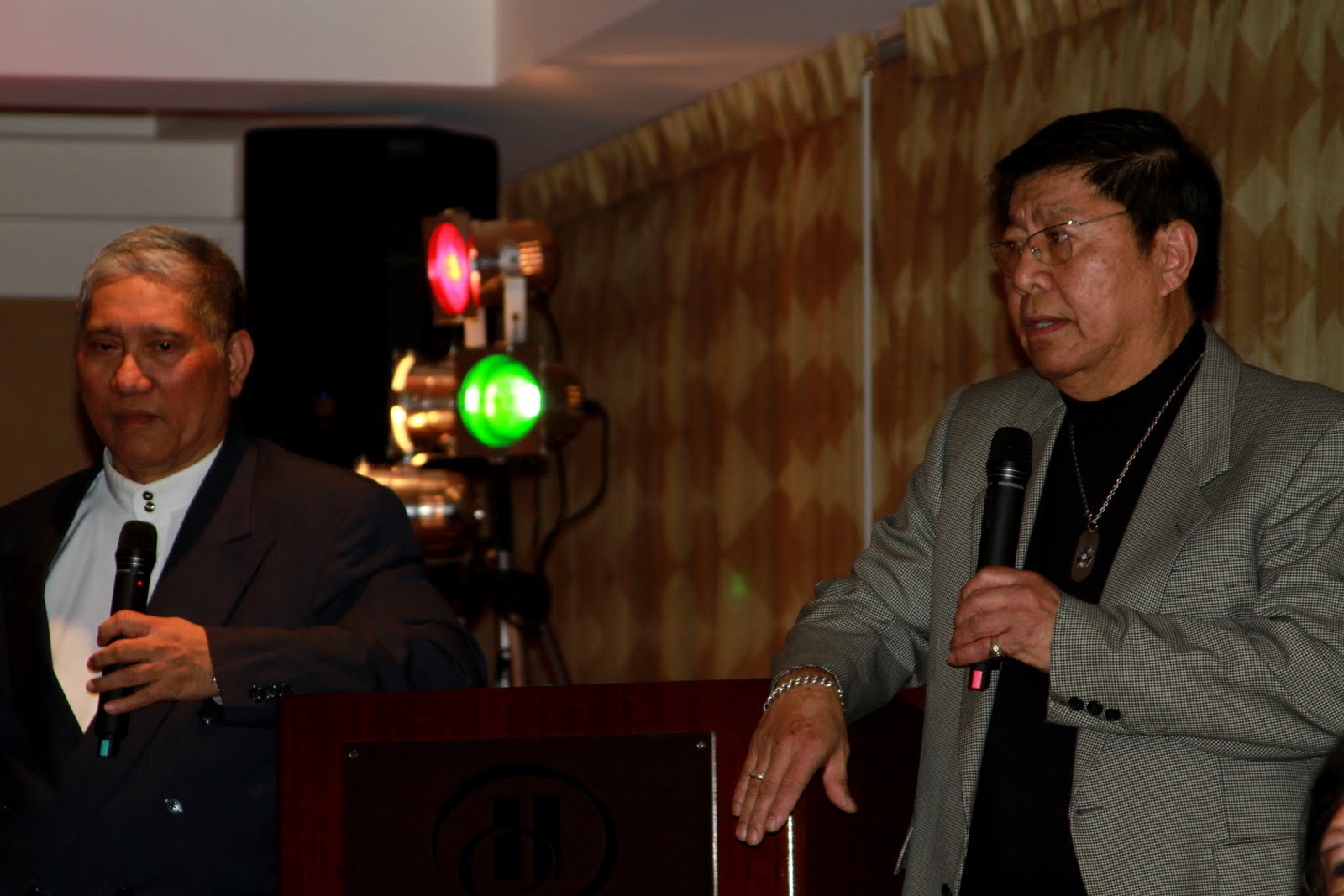
:
Finally, it was time for us to depart. Tight handshakes and hugs were exchanged. Brother Oca couldn’t help getting misty eyed, he has to wear his Ray Bans to hide it. Sadness and happiness both can be seen on each other’s faces as we bade goodbye to the brothers at Jonah’s place. I can’t forget the tight hug that Brother Tito made – reluctantly letting you go, his eyes reddened with tears. Thanks so much to Brother Jojo Lobusta for teaching Brother Tito the “APO whistle”. It was fun watching Brother Tito sound that whistle with a nod and a wink! I miss you all my dear brothers. Brothers Cesar Frias, Alex Custodio, and Oliver Vergara, I am really honored to meet you all and I hope to see you again and let the experience remind you of what we are. It was one of the most memorable event and I felt sorry for all who missed it. Manang Linda, Brother Norie’s wife said: “This is the most alive and joyous Valentine Party that they had attended.” Lastly let us remind ourselves what brother Cesar Frias stressed in his word of wisdom – “Let unity be the main reason to keep the fraternity alive!”


RIP Dr. Imelda Ocampo Andres


48 YEARS LATER OUR BAY AREA CONTINGENT
His high school friends include Renato Constantino Jr (cc: Marika B. Constantino) and Eddie Manalac. Kindly ask your friends to pray for the eternal repose of his soul.

SAN FRANCISCO BAY AREA UNIVERSITY OF THE PHILIPPINES PREP 61
Destination San Francisco. "If you're going to San Francisco, be sure to wear some flowers in your hair...If you're going to San Francisco, Summertime will be a love-in there" We first arrived in San Francisco in the late 60's, enamored about the City, loved it and never left the place. I remember my first walk/day here in the US. The new country was a treat the culture did not surprise me as I was aware of the scenes from readings before, but then, mostly involved in search of a job. Funny, when we look back, we think, we squandered the times of our life when our hormones were in tune with our desires. I was single then, going to school in San Francisco and also at the California State University in Sacramento, during those days really experienced the happening, although a little bit subdued due to work in the day time. That song forever imprinted in my mind "San Francisco" it became an instant hit and quickly transcended its original purpose by popularizing an idealized image of San Francisco. As the memories flicker down the memory lane, I wish to live back in the sixties with the images of the hills over the bay frozen in time....


J. GUZMAN, A. CAPULONG, CAP, RC, AC
FROM RC ANCIENT MEMORIES
Panciteria Moderna was the place to go for pancit miki and miki bihon
already wrapped in their version of "tetra pak". Pancit bihon was the
specialty of Panciteria Wa Nam.
At Ma Mon Luk siopao was at 30 centavos; mami was at 70 centavos or 2
pcs of siomai (large) with unlimited soup was at 30 centavos. So with
one peso busog ka na.
The Shangri-la in the basement of Shelborne Hotel (at the back) was
the place to go for dates if you wanted a dark and cozy atmosphere.
The Embers (in Cubao) of Bert Nievera was also popular. The Black
Angel along Shaw Blvd near the corner of Kalentong in Mandaluyong was
a very good place to listen to soft music (e.g. Fleetwoods, etc) and
the lights were also quite low. With Php 30- 50 in your pocket you
were in pretty good shape for a date.
"Bakuran" was the in-thing at parties with "screening" from a friend
to assist you in getting a dance with a girl who was very sought
after.
Wack-Wack, the Sky Room in Jai-Alai, the penthouse of the Rufino
Bldg. as well as the penthouse of the Sarmiento Bldg right opposite it
were the favorite places for proms and balls. Sikat ang event if the
Hi-Jacks; the Electromaniacs or the Technicolors was the "combo"
playing. Alta Vista along Roxas Blvd. was the favorite place for
wedding receptions at Php8.50 per cover!
Special ringside seats for performances at the Araneta Coliseum were
at Php 5.00 per. So with Php 20.00 you could safely invite someone and
still have enough for a snack afterwards or a game of "putt and
putt" at the mini-golf place located at the back of Araneta.
During early 60's, 5 centavos and 10 centavos ang bayad sa jeep.
Manila and Suburbs ang lahat ng biyahe ng jeep noon na 3 seater lang
at pitpit ka pagbata ka pag sumakay ka.
Sa Avenida at Sta. Cruz, Blumentritt, Tayuman, San Roque Church,
Espiritu Santo Church, Grace Park at Monumento ang mga sikat na
lugar.
Yung Good Earth Emporium pwede ring idagdag sa mga magagandang
shopping mall noong araw. Yung Manila Grand Opera house, Odeon,
Hollywood, Cinerama, Ideal, State, Lyric, Capitol ang mga sikat na
sinehan noon. Sa Q.C ay sikat yung Max's Chicken at Dayrit. Ang dollar
rate noon ay 3.70Php sa 1$ ang palitan. Ang Sarsi ay cinco centavos (5
centavos) 10 Centavos ang Coke.
Pero sikat yung Canada Dry, Uva at orange ang paborito namin noon.
Pag pasko madalas kami sa Sta Cruz para manood ng palabas sa Manila
COD para sa Xmas season. Noon walang chippy at potato chips, ang
merienda ay banana cue, camote cue, palitaw, biko, pinipig, halo-halo,
carioca, pilipit, butsi, hopiang hapon, hopiang munggo, hopiang
baboy, bibingka, puto, cassava, cake o budin, suman at mani.
Ang apple ay apat-piso ang benta sa Lawton Bus terminal. Mas mahal pa
yung local na chico na pineras. Ang grapes, pear, at apple ang
karaniwang binebenta sa mga bus terminal na papuntang south (BLTB).
Ang bus noon ay bukas lahat yung isang side kaya doon dumadaan ang mga
pasahero. Ang sikat na mga Plaza noon ay Plaza Goiti, Plaza Miranda at
Plaza Sta. Cruz. Sa mga bakery sa Manila ay sikat yung machacao na
tinapay.
May I add: Hallili Beer (sold to the Sorianos), Tody chocolate drink
in cans, Julep, Pancho Pantero, Horlicks malted milk tablets; Hallili
bus, Super (dog logo) Transit, Yujuico, JD & MD buses; ShoeMart
Carriedo (the first SM) followed by 2nd ShoeMart beside Ideal Theater
and fourth was SM Echague with a revolving restaurant at the top
floor.
Safari Club beside Manila Zoo at the height of the "Twist" craze,
Dance-O-Rama with Pete Roa & Baby O'Brien, Jam Session every 6PM on
television.
Now anyone who missed those days can't really claim they've seen and
tasted the best. Every generation has its own set of "Aces". Do you
recall when: You tasted Fres Gusto, Cosmos "Sarsi" Sarsaparilla, RC
Cola, Yes Cola, Teem, Darigold Evap, Liberty Condensada, Choco Vim,
Sunkist Orange (in tetra packs), Magnolia Chocolait, (pronounced
chocolight), Klim (the word "milk" spelled backwards), Big 20
Hamburgers, Foot-long hotdog, Tweet & Jiggs Candies (by Mr. Krieger),
Sugus Candies, Choco Nut, Tootsie Roll, Blenda Margarine, Serg's
Chocolate, kerosene-flavored popcorn and kropeck along Dewey Blvd,
dirty ice cream, Magnolia Ice Cream sandwich, Selecta ice cream (now
Arce Dairy) and their fresh carabao's milk, Magnolia popsicles in
orange, chocolate and langka flavors, Sison Ice Drops in monggo, and
buko flavors, Milky Way's buko sherbet, Acme Supermarket' s sundaes
and Coney Island's 32 flavors?
You went to: Syvel's, Assandas, Arcegas at the Maranaw Arcade,
Funhouse at Bricktown, Aguinaldo, Erehwon Bookstore, Alemars
Bookstore, Bookmark, Botica Boie, Makati Supermarket (in Makati!),
Rizal Theater (with its spacious lobby) with D'Bankers Barbershop and
Leila's Coffee Shop, Tropical Hut (and its hamburger), Acme
Supermarket, Cherry Foodarama, The Regent of Manila, Hotel Mabuhay,
Manila Hilton, Christmas carnival (where Dusit Hotel now stands),
Villa Pansol and Lido Beach?
Rizal what?" "Who would be crazy to build a cinema in the middle of
nowhere?" It turned out to be the best theater in the city of Makati
(at the same site now occupied by Shangri-La Hotel).
And ate at: The original A&W along UN Avenue in Manila, Aristocrat
across Malate Church, Italian Village, cafÃ(c) Valenzuela, Bonanza
Restaurant, Brown Derby, Little Quiapo, Country Bake Shop, Selecta
Restaurants (owned by the Arce family), Taza de Oro; New Europe,
Madrid, Cucina Italiana, La Cibeles at A. Mabini, The Plaza, Jade
Garden Restaurant, Luau, The Makati Automat, Sulo Restaurant (in
Makati), Makati Fastfood Center (the first ever), Bulakena, Casa
Marcos, Au Bon Vivant, Salambao Restaurant, Dairy Queen along
Buendia, Di Mark's Pizza, the elegant dining room of the old Army &
Navy Club. Botica Boie in Escolta, Albas in Florida, Malate Brown
Derby and their signature foot-long hotdog came with its special,
extra tarty mustard sauce and a hot, crispy bun. We used to park at
their drive-in bays after we were exhausted from all-night partying
but with enough energy to gobble down sausages and soft drinks.
The Plaza was the favorite venue for all formal school and social
functions. Food was not a big factor so long as cozy couples could
have their special table for two.
You shopped at: Escolta, Harrison Plaza (when it was still clean and
had the bump cars), Ali Mall, Rustan's in San Marcelino, Aguinaldo's
in Cubao, Quezon City; Shoemart in Makati was a small, split-level
affair.
The original Rustan's was the garage of the Tantoco's residential
house which was eventually converted into a dazzling shop filled with
eclectic things and collectibles.
Blockbuster movies were: Love Story, Mahogany, Saturday Night Fever,
Grease, Planet of the Apes, Star Wars, Logan's Run, Battlestar
Galactica, Paper Chase, Enter The Dragon, Jaws, Towering Inferno,
Poseidon Adventure, Carrie, Willard (theme song was Ben sang by a
young Michael Jackson), Exorcist, Love Bug, Tinimbang Ka Nguni't
Kulang.
You wore, carried or used Denman brush tucked in your back pants
pocket, Jordache and Sassoon jeans, Bata rubber shoes, Botak running
shoes, Ace flexible comb, Ace clutchbag, Carrera shades, Ray-Ban,
Photochromic and Ambermatic shades, Foster Grant sunglasses, Alaskin,
tie-dye shirts and pants, double-knit pants, Sergio Valente, Vidal
Sassoon, Fiorucci, Banlon, Ye-ye Vonnel shirts, Nik-Nik, Bang-Bang,
Faded Glory, Jazzie, Puma Topfit, Tiger Onitsuka, Happy Feet, clogs,
Wet look shoes, Pierre Cardin, Brut, Jovan musk oil and grass oil,
Aramis, platform shoes with bell-bottom pants and wide-buckled belts.
You had your hair styled or permed by: Flavio and Carmen, Nomer's,
Lita Rio, Grace Lagman, Dick & Lucy, and Kayumanggi. That was the time
of Aqua Net stiff, foot-high beehives, French twist and Kiss Me liquid
eye liners and Pretty Quik instant facial blotters.
You sang: Bobby, Bobby, Bobby by Jo Ann Campbell, Someday by Ricky
Nelson, And I Love Her by the Beatles, Cherish by the Association,
Because by Dave Clark Five, Distant Shores by Chad and Jeremy, Rainy
Days & Mondays by the Carpenters, You've Got a Friend by Carol King,
Hundred Miles by Peter, Paul and Mary, Evergreen by Paul Williams.
Saved whole month's allowance P50 to watch the Beatles perform live at
Rizal Memorial Coliseum in 1965.
It was hip to listen to: Bingo Lacson and Jo San Diego (past
midnight) of DZMT, the singing sensations from Ateneo de Manila? RJ
and the Riots, The Loonilarks, Joe Mari Chan and the APO Hiking
Society and dance to live combo music garbed in cocktail dresses and
dark suits.
DZMT was affiliated with the Manila Times and was the only broadcast
station that stayed on the air past midnight. Jo San Diego was their
anchor woman (she with the velvety bedroom voice).
And danced at: Manila Hotel's Jungle Bar, Stargazer, Bayside Night
Club (with live music by the Carding Cruz band), and the Nile (and the
Italian singing group Five n' Fives), Queue Disco, Circuit Disco,
Where Else? Altitude 49, Delirium (in Greenbelt) D'Flame, Rino's, and
Velvet Slum, Wells Fargo, and Coco Banana.
After graduation, jam sessions were replaced by night clubs and
Bayside was the place to go for live bands and non-stop dancing.
Do you remember when: Dollar to peso exchange rate was $1 = P7,
Walang Tindigan buses charged a flat rate of P1, Love Bus fare was
P1.50, family size Shakey's Pizza cost less than P40, Malate streets
were named after US States (Pennsylvania, Colorado, etc.); Paranaque,
San Juan, Makati, Pasig, Las Pinas, Taguig, Pateros and Muntinlupa
were municipalities of Rizal province; DLSU was De La Salle College,
Poveda was Institucion Teresiana, Adamson University was the original
St. Theresa's campus, Robinsons mall was the Assumption Convent
campus, Petron was Esso, Villamor Air Base was then known as Nichols
Air Base, bancas were plenty in the Baclaran side of Dewey Blvd. (now
Roxas Blvd.) and traffic was non-existent in Tagaytay.
PLDT telephone numbers were five digits and you used your index finger
to dial a number one at a time.
If you remember all these things, you're history in great company and
I dare say, happy to be.
Since the writer was fleeting between two generations (60's-70"s), you
party goers surely remember the Dyna Souls (dubbed the Beatles of the
Philippines) , The Tilt Down Men (The Sotto brothers, Tito & Val,
favored the Dave Clark 5) Jaime Jose & the Deltas* (remember Maggie
Dela Riva?) What about gate crashing a "Tipar" (for party) and the
ensuing rumble between feuding barkadas: The Havocs, Combat, &
Exotics, meron pang kanya-kanyang busina (car honking IDs).
Remember BMI (Baguio Military Institute)? That school was a dumping
ground for kicked out students from Manila and kids that needed
discipline. Let us not forget ang mga taga "Baste" (San Sebastian).
Ang daming siga noong araw.
Sure you remember playing Pelota... And drag racing along Ortigas and
behind Meralco..
Sikat ka sa barkada kung may "syota" (girl friend) kang "Colegiala"
(Assumption, STC, St. Scho, Maryknoll, Holy Spirit; and the other
schools - St. Paul's, St. Joseph, Centro Escolar ). As proof, you
should be wearing her high school ring in your pinkie finger...And
dapat karta 9 ...You probably took her out to the Butterfly (at UP) to
listen to folk songs and sip Butterfly Iced Tea.
Did you get to date a "chick" from Brent (Baguio) and IS (Makati)?
Of course you should have enough cash for the gaso (gas), tsibog
(food/dinner) , cover charge/drinks at the Flame or Rino's, konting
damo, and for the finale, enough datong (cash) para sa "biglang liko".
Or kung gipit for cash, park at the huge lot of Folk Arts and just do
it in the car...Kaya lang dapat may "Tapwe" (Singkuwenta pesos) pang
lagay sa parak (police), and a handy calling card of a military
officer with a hand written note in the back that "you should be
given utmost courtesy"... .jeesh...
Then in the late 70's early 80's came the CB radio phenomenon.. Tibs
on Makati Ave. for beer and happy hour at the Manila Garden; always
overflowing with beer and chicken wings...Tapos masahe sa Imperial
Palace or Maalikaya... To cap the night, a stop at Birds of the Same
Feather for smooth jazz courtesy of Eddie Katindig.
Tapos you get to do it all over again the following day.


The future a dream and now the reality
These were icons of our mind as kids
Now we know and we have learned
Tomorrow, the tomorrow is uncertain
With unknown script
You don't know how
Life can bring it
Because everything is passing
And what will happen tomorrow
Nobody knows.
Now that our wish came true
To become adults, our life is complete
Time is not enough for our dreams anymore
Our childhood is gone…

The Captain's Table, opposite us Judith and Wayne my warm immediate friends


RIP AMADO SANTOS

Amado Punzalang is the virtuoso on the piano. He resides in New Jersey. He plays sa simbahan. Paul Montalban and Vivian are musicians as well. Did you know that Paolo Montalban (Cinderella actor, partner of Brandy) is the son of Paul? A handful of our 61 classmates live in the West Coast as listed: Jose Guzman, Honorio San Pedro, Erlinda Ramos, Victoria Tolentino, Jose Buenaventura, Amado Santos, Ernesto Tan Gatue, Edgardo Silverio, Milagros Suva, Lilac Umali, Evelyn Fontanilla, Sister Elsa Sevilla, Josefino Quiambao, Dolores Vergara, Melchor Capili, Augusto Capulong etc. Carol Corpus, Paul M., Amado Punzalang, Nilda Fulgencio reside in the East Coast. Vilma Bala, Ping Fargas, Macrina de Leon etc. nasa Toronto. naman. Nelia Gonzales nasa Richmond, BC, Canada naman. George Olivar passed away three months ago. Jose Sason & Jose Pecache passed on too.....a few years back
Dear Amado,
Since you are the piano virtuoso among the classmates, here is a collection of concert grands including the Bosendorfer that you admire and wish to play. Take care and Click below......
- THE CONCERT GRAND PIANOS
- God Bless, ASC


Our Field trips to Bagiuo: The University of the Philippines made this field trips available to the student body under the supervision of Mr. Rubio. I remember our trips to Bagiuo and Bicol by train. The later, I was not able to avail. students start the term with a trip to various High Schools, either to a resort, an American base, or towns in Luzon. School life is also enriched by additional field trips to such places important to the nation’s infrastructure, like dams, markets, military base and institutions like PMA. BURNHAM PARK Bagiuo below photos

Burnham Park, where we rented roller skates, and then, shared one of these tricycles with an upper class junior. I held both her hands, no names please, a boyish romantic encounter. Surely an unforgettable Chance Encounter for a boy of 13, as she shifted towards me. We cuddled and continued to ride in the cool afternoon fog.


1st row: Manuel Edralin,Wilfredo de Leon,Cynthia Cuevas,Eldora Bella,Nilda Fulgencio, Araceli Cruz (?),Lourdes Gacad,Rosalita Vizconde,Melanie Villanueva,Lilia Laqui,Frine Bautista, Rosalinda Roa Edgardo Cruz
2nd row: Roma Clemente,Roberto San Juan, Oscar Recto, Milagros Suva, Lilac Umali, Elizabeth Stuart, Melind Caparas, Erlinda Ramos, Lourdes Balderrama,Bilma Bala,Roberto Roa,Romeo Fojas
3rd row:Romeo Miclat,Paul Montalban,Virgilio Vergara,Jose Acevedo,Jose Fargas,Amado Santos,Philip Kastner,Jesus Ching, Melchor Capili, Pascual Veron Cruz, Eduardo Maglaque and Rodnel Javier


1960: I became aware of my heritage in my junior year at UP Prep and began preparation for my appointment as a cadet of the PMA at Fort Del Pilar. This was a period in my teen years that I remember fondly, memories in my High School, of the hectic days, dashing thru the corridors catching my schedule of classes at Rizal Hall. I recall my bag loaded with books, eager, wide eyed, and quick to learn the tenets of math, the arts and sciences. I remember past friends and stormy situations that most teenagers weathered through. As in life surviving the unspoken pecking order among bigger classmates and the so called in crowd was the rule. That lone wolf streak that kept me apart, which peers seemed to see as a weakness was a measure of heritage that set me off from the current teenage precepts of the day. Later, when of age and after further studies, having ever spurred curiosity, whetted my appetite for a life of adventure, of soldiering and foreign lands.


IN THIS PHOTO ALONE ALMOST ONE THIRD (TEN) DEPARTED TO ANOTHER DIMENSION BEGINNING WITH MISS GALANG, NICK PELAEZ, JOSE QUIAMBAO..MELCHOR CAPILI..MAMERTO MADELA...NESTOR RIVADELO...EVANGELINE GABRIEL...
MANUEL EDRALIN....CARLOS GARCIA...ERNESTO VILLAREAL
MANUEL EDRALIN....CARLOS GARCIA...ERNESTO VILLAREAL

Hello Cap and Helen, Alex and Marissa,
Maraming salamat! Kahit aanim lang tayo, (Si Augie and Violet missing-in-action and much missed) masaya at busog na busog kami sa
ating salu-salo. Pati ang mga anak namin, sina Karmina at Noel, walang katapusang rave sa ginisang munggo ni Helen at yung broiled
catfish niya (to die for talaga ang sarap!!!).
Thanks Alex for the many tips o various matters and MARISSA! for the beautiful music. Ang galing-galing mo palang mag-piano. And Helen, your shopping tips are invaluable. I will really take you up on your offer na sa next
tagpuan natin, e, sa city na tayo magkita. PERO, kailangan pagdating ninyo sa Pilipinas, (sa Marso, alam ko,nandito kayo) bigyan naman ninyo kami ng isang araw para kami naman ang mag-host ng mini sa inyo.
Pasusundo namin kayo sa Morong. Ayan, wala na kayong excuse. Let us know when you are back in the Pilipinas Islands so we can schedule it.
Again, our thanks to all of you. Helen, mamaya ko na ipadadala ko yung galing kay Karmina. Mag lalast day labas muna kami nila RC, Noel
and Karmina. Of course, kaladkad namin ang mga bata.
Dudi and RC


After a terrific night in Vallejo, Dudi and I just got up after lazing
away in bed practically the whole morning recollecting accounts of the
night.
Thanks to Cap and his gracious wife Helen for organizing and hosting
the mini. It was great to see you guys once again. It was fun!!
After 47 years we finally meet up with Alex and his lovely wife
Marissa. And to think they were living only three blocks away from
Cap up to about 3 years ago! It really takes a mini to reconnect.
Pol: Alex should be your friend (now!) he has just lost some 20
pounds and is now a slimmer 204 pounds! Not the same size as in Prep!
Hehehe.
Thanks to Joe for driving all the way from Dublin. Missed Mayette.
Thanks to Augie and Violet for finally finding Cap's house while
avoiding launching divorce proceedings on the way.
The food and the wine AND the company makes me fully support the plan
to organize a reunion as soon as possible. A cruise would be an
excellent opportunity to bond once more. Remember we're all in the
"pre-departure lounge."


Memories of our field trip to Bagiuo in 1957. First stop was Angeles, Pampanga, where we toured Clark with Dr. Roa. I remember the doctor riding in a brand new 1957 yellow Chrysler with all the high fins typical of the cars of the late 50’s. The day was not over yet, a jam session in the moonlight at a basket ball court at the school grounds. The seniors and teachers alike did enjoy the ball hosted by the Pampanga High School. I remember the single Ms. Roma Clemente, photo above, talking about her repertoire of dances and how she enjoyed it. Me, I stayed behind, as I do not dance yet, but was busy talking to local high school girls. I found out the beddings belong to them. Thinking this time, how UP Prep can reciprocate. Billets were in a gymnasium with rows of cots and mosquito nets. I do not know where the girls were, but the energy was ever flowing from the boys…as shoes were flying everywhere in the dark, landing safely at the mosquito nets. Above Pictures of the boys in a later field trip (1960) to Bagiuo and Pampanga High School


The University of the Philippines made this field trips available to the student body under the supervision of Mr. Rubio. I remember our trips to Bagiuo and Bicol by train. The later, I was not able to avail. students start the term with a trip to various High Schools, either to a resort, an American base, or towns in Luzon. School life is also enriched by additional field trips to such places important to the nation’s infrastructure, like dams, markets, military base and institutions like PMA.
|

ROAD TO BAGIUO ABOVE, THE KENNON
ZIGZAG ROAD
  |

Market place, Baguio, Pines Hotel where we
stayed for two nights
View of the Bagiuo Cathedral from my hotel room located adjacent to Pines Hotel.
Tanay, lake meets the mountain Ah me! the fIfty years since last we met Seem to me fifty folios bound and set By Time, the great transcriber, on his shelves, Wherein are written the histories of ourselves. What tragedies, what comedies, are there; What joy and grief, what rapture and despair! What chronicles of triumph and defeat, Of struggle, and temptation, and retreat! What records of regrets, and doubts, and fears What pages blotted, blistered by our tears! What lovely landscapes on the margin shine, What sweet, angelic faces, what divine And holy images of love and trust, Undimmed by age, unsoiled by damp or dust! |


|


Mr Manuel Rubio my Tagalog teacher and also the Principal of UP Prep


- see..... THE CONCERT GRAND PIANOS
2002 Somewhere in the Pacific Atoll of Kwajalein. Of the 29 atolls, 27 are accessible by small plane (Air Marshall Islands). Majuro and Kwajalein atolls, the two population centres are serviced by both Air Marshall Islands and Continental Air Micronesia Jet Aircraft. Kwajalein Atoll is in the heart of the Marshall Islands. It lies in the Ralik Chain, 2,100 nmi (2,400 mi; 3,900 km) southwest of Honolulu, Hawaii at 8°43′N 167°44′E. Kwajalein is the world's largest coral atoll and comprises 93 islands and islets, it has a land area of 1,560 acres (6.33 km²),[1]:12 and surrounds one of the largest lagoons in the world, measuring 324 mi² (839 km²) in size.
The two most significant land masses are Kwajalein Island in the south, and the linked islands of Roi-Namur in the north. By the start of World War II, the Marshalls (South Pacific Mandate) were already an integral part of the Japanese perimeter of defense. Its facilities were being utilized as outlying bases for submarines and surface warships, as well as for air staging for future advances being planned against Ellice, the Fiji Islands, and Samoa.
The Battle of Kwajalein was fought as part of the Pacific campaign of World War II. It took place from 31 January-3 February 1944, on Kwajalein Atoll in the Marshall Islands. Employing the hard-learned lessons of the battle of Tarawa, the United States launched a successful twin assault on the main islands of Kwajalein in the south and Roi-Namur in the north. The Japanese defenders put up stiff resistance, although outnumbered and under-prepared. The determined defense of Roi-Namur left only 51 survivors of an original garrison of 3,500.


God bless my alumni association
In this our chosen Nation,
Let it blossom forth in harmony and peace;
From east to west establish the brotherhood and friendship,
That all strife and loneliness may cease.
In the busy offices and streets of cities,
In the mountains and quiet fields of farms,
Raise each other's mind to greater vision,
Shield my classmates' life from that which harms.
We give thanks for precious friends and alliance;
Help us cherish them as we should;
May we give ourselves in service to each other
for your praise and other's good.......ASC
I WAS READING SOME OLD 61 EMAILS AND CAME ACROSS THE NICKNAMES. I WOULD SAY IT WAS HILARIOUS TO READ THIS AND HOW CLASSMATES REMEMBER EACH AND EVERY ONE. YOU WERE VERY KIND, SOME NAMES ARE X-RATED AS I RECALL, BUT YOU DID A GOOD JOB RECALLING THE SANITIZED MONICKER.
ASC
After 38 years, not an easy task. Kaya pala si Kardinal ang na-assign na mag-recall: mahirap na medyo delikado pa.Mahirap dahil hindi ako saksi sa lahat ng pangyayari sa lahat ng sections. Delikado dahil baka may sugat namanariwa. Pero katuwaan lang ito. Sana lahat matuwa at walang mapikon--afterall trabaho lang ito at " recaller" lang ako hindi "namer" o "baptizer".
Bato-bato sa langit, ang matamaan mag-email agad.
> 1.Jose Acevedo. Babe, Baba, Ali Baba.
> 2.Godofredo Alaras. Godofredo.
> 3.Corazon Amante. Cora. Pipit( from Joey)
> 4.Andrew Ang.Ang. Undress Ang( from Oca V.)
> 5.Arlene Aquino+. Arlene, Stitch, Stitch.
>
> 6.Vilma Bala. Vilma. Bambi.
> 7.Lourdes Balderrama. Dudi......(aka. ..Balde shortened version of Balderama)
> 8.Alipio Baluyut+. Alip.
> 9.Frine Bautista. Frine.
> 10.Eldora Bella. Dhoree.
>
> 11.Jose Buenaventura. Joey. Yat.
> 12.Melinda Caparas. Melinda. It.
> 13.Melchor Capili. Melchor. Cap. Ohab( from Ping)
> 14.Augusto Capulong. Augie.
> 15.Nemesio Ceralde. Jr. Boy. Boyd. Tenggoy Jr.
>
> 16.Jesus Ching. Ching...(aka Foo Man Ching)
> 17.Renato Constantino, Jr. RC. Yat. One Beer Kid. Wangbu.
> 18.Carol Corpus. Carol.Carole.
> 19.Cynthia Cuevas. Cynthia. Cindy.
> 20.Rogelio Cuevas. Cuevas. Roger.
21.Alexander Custodio. Alex. Todio. Custodio.... General "Bull" Tojo (mannerismm of bowing)
> 22.Manuel Edralin. Manny. Edra. Antok.
> 23.Jose Fargas. Ping.
> 24.Evangeline Farolan. Eva.
> 25.Wilhelmina Fernandez. Mimay. Curly Bangs.
>
> 26.Romeo Fojas. Fojie.
> 27.Evelyn Fontanilla. Evelyn.
> 28.Nilda Fulgencio. Nilda. FT.French Twist.
> 29.Carlos Garcia. Itoy. Bukol...Elvis pompadour and then shortened, aka..Elpo Boy/Epoy.... last time I saw Epoy was at Mapua during my Junior year; he was registering for classes with his older brother.
> 30.Nelia Gonzales. Nelia. Nel.
>
> 31.Jose Guzman. Guzman. Joe.
> 32.Rene Herbosa. Rene. Pompoy.
> 33.Romeo Imbuido. Imbuido. Romy. Imbudo.
> 34.Marilyn Jamias. Marilyn...The Pianist
> 35.Rodnel Javier. Rodnel....McKinley Boy...aka Medyas from Lilia
>
> 36.Lilia Laqui. Lilia....(crush of Rodnel)
> 37.Macrina de Leon. Macrina. Macre.
> 38.Wilfrido de Leon. Willy. Daga. Tenga.
> 39.Hector Lumberio. Lumberio. Hec.
> 40.Mamerto Madella+. Madella. (Saw him last at V-Luna Hospital for our Physical for PMA;he has hypertension and skin rash;I was myopic; he got in, at second try.
>
> 41.Carmelo Madrid. Madrid.
> 42.Eduardo Maglaque. Ed.
> 43.Bayani Mandanas. Yani. Bondy. Bondat.
> 44.Emmanuel Manalac+. Emmy. Emong.
> 45.Eduardo Manalac. Ed. Eddie.
>
> 46.Manuel Medina. Medy. Manny.
> 47.Bonita de Mesa. Bonita. Bonnie.
> 48.Paul Montalban. Paul.
> 49.Leopoldo Moral, Jr. Pol. Moral.Neggy. Cardinal.
> 50.Juliana Nable. Juliana. Julie...aka Noble
>
> 51.Teresita Narciso. Tessie. Kumbinto.
> 52.Edgar Navarro. Ed
> 53.Imelda Ocampo. Imelda.
> 54.George Olivar, Jr. George. Diyords.
> 55.Marcelita Ordonez. Marce.
>
> 56.Lualhati Pablo. Lulu. Usec Pablo.
> 57.Angelita Pasamba.Angelita. Lita. Angge.
> 58.Cesar Pascual. Cesar. Sandok. Sandy.
> 59.Quintin Pastrana. Quintin. Bakya. Q.
> 60.Mildred Patino. Mildred.
>
> 61.Jose Pecache+. Pec. Jay...aka Pecs he likes to flex his "muscles"
> 62.Nicolas Pelaez+. Pelaez. Nic.Negro... .Nick can be persistent in his quest for a girlfriend. We once followed a certain sophomore named Kathleen.... . all the way home thru busses and jeepneys with her, and managed to egged a smile; all the while serenading her the Irish ditty Kathleen in front of passengers.
> 63.Amado Punsalang, Jr. Amado. Dodie.
> 64.Josefino Quiambao. Quiambao. Pepe.....aka Yodel King
> 65.Barbara Ramirez. Babs.
>
> 66.Corazon Ramirez. Cora. Corkie.
> 67.Erlinda Ramos. Erlinda...
> 68.Helen Reantaso. Helen.
> 69.Oscar Recto+. Oca. Torecs.
> 70.Irma Remo. Irma.
>
> 71.Deo Reyes. Deo.
> 72.Nestor Rivadelo. Vads.Sleeping Vads.
> 73.Roberto Roa. Boots...He is in LA according to relatives I met aboard ship.
> 74.Rosalinda Roa. Rosalinda.
> 75.Romeo Salvador. Romy....aka Anita Eckberg
>
> 76.Alberto San Agustin. Bert.
> 77.Roberto San Juan. Johnny. Bot. San Juan.
> 78.Honorio San Pedro. Nori. Honorio.
> 79.Amado Santos, Jr. Dong. Jun.
> 80.Jose Sason. Sax. Negro. Kulot. Nonoy. Saxon. Saxophone.
>
> 81.Zenaida Seva. Zeny.
> 82.Ma. Lourdes Saguil. Hedy....last time I saw her was during the end of our sophomore year; Loved to dance with her slow (that is the only dance I know) even if I was only her shoulder height ...sorry Lani, that was before the prom.
> 83.Elsa Cristina Sevilla. Elsa. Sister. MS...No nonsense Elsa
> 84.Edgardo Silverio. Ed. Silver. Kabayo.
> 85.Milagros Suva. Mila.
>
> 86.Arthur Tan. Atot.
> 87.Ernesto Tan-Gatue.Boy. ..Beat up Hannibal Manikan mano a mano
> 88.Victoria Tolentino. Vicky. Toyang.
> 89.Lilac Umali. Lilac.
> 90.Oscar Valenzuela. Oscar. Oca.
>
> 91.Dolores Vergara. Dolores. Dolly.
> 92.Virgilio Vergara. Vius. Ilyong. Ronnie.
> 93.Pascual Veron-Cruz Jr. Pascual. Kalbo. Pasky. Jun...aka Math Wiz Veron
> 94.Melanie Villanueva. Melanie. Lani.
> 95.Ernesto Villareal. Pong. Ponga.
>
> 96.Pablo Villavicencio. Pablo.Bing.
> 97.Rosalita Vizconde. Rosalita. Its.
> 98.Cynthia Catindig. Cynthia.
> 99.Evangeline Gabriel. Evangeline.. ...aka..Smiling Vangie..always with a smile
> 100.Lourdes Gacad. Lourdes.


   |

 Environs U. P. Manila campus  |  |
 Sarmiento Bldg, Makati, where I worked at Procter & Gamble;  ARISTOCRAT. The closest restaurant to our place at MNS. 432 San Andres St. cor. Roxas Blvd., Malate |   Top, movie houses, City Hall, Right Photo Bagiuo, the terraces and the Lost highway bontoc-mainit (mountain province). A mountain trail in the Cordillera, Philippines. Rizal Avenue the street was named after Rizal, it was referred to as Calle Dulumbayan. I watched movies at the Ideal, State, Dalisay and Avenue Theaters. Later on ... the Universal Theater and Odeon and Galaxy. And Scala, Apollo, Alegria and Opera House. |

In the twilight of age all things seem strange and phantasmal,
As between daylight and dark ghost-like the landscape My heart goes back to wander there,
And among the dreams of the days that were,
I find my lost youth again.
And the strange and beautiful song,
The groves are repeating it still:
"A boy's will is the wind's will,
And the thoughts of youth are long, long thoughts."
I should not be withheld but that some day
into their vastness I should steal away,
Fearless of ever finding open land,
or highway where the slow wheel pours the sand...RF
Art is long, and Time is fleeting,
And our hearts, though stout and brave,
Still, like muffled drums, are beating
Funeral marches to the grave.
In the world's broad field of battle,
In the bivouac of Life,
Be not like dumb, driven cattle!
Be a hero in the strife!
Trust no Future, howe'er pleasant!
Let the dead Past bury its dead!
Act,--act in the living Present!
Heart within, and God o'erhead!
Lives of great men all remind us
We can make our lives sublime,
And, departing, leave behind us
Footprints on the sands of time;
Footprints, that perhaps another,
Sailing o'er life's solemn main,
A forlorn and shipwrecked brother,
Seeing, shall take heart again.
Let us, then, be up and doing,
With a heart for any fate;
Still achieving, still pursuing,
Learn to labor and to wait...


